
A child’s cough is often worse at night because lying flat lets mucus pool at the back of the throat, and there are fewer distractions to take their mind off it. Most night coughs are part of a common cold and settle with simple comfort measures such as fluids, rest and a smoke-free bedroom. A GP review is worth arranging if the cough lasts more than four weeks, keeps disturbing sleep, or occurs together with wheezing or breathing difficulty.
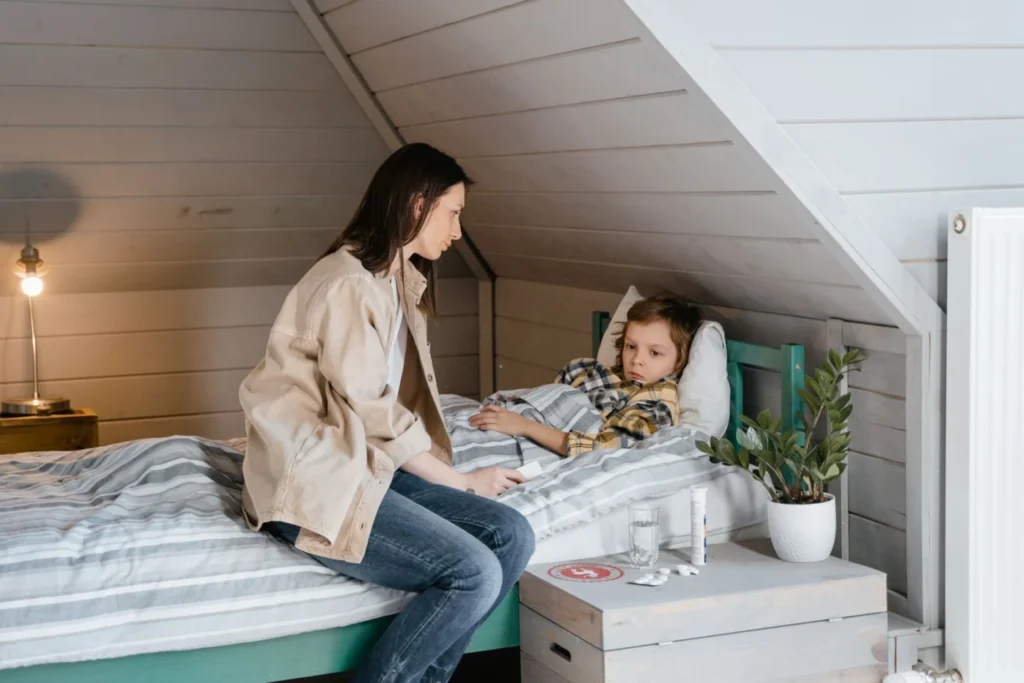
This guide explains why coughs tend to worsen overnight, what you can safely try at home, which patterns may point to asthma or another cause, and — importantly — the warning signs that mean your child needs prompt or emergency medical care.
Why Do Children Cough More at Night?
A cough can feel worse after dark for a few reasons. Lying down allows mucus from the nose and sinuses to drain down the back of the throat, which can trigger coughing. Bedrooms are also quieter, so a mild daytime cough that was easy to ignore becomes much more noticeable once the house is still.
The Royal Children’s Hospital Melbourne notes that most childhood coughs are linked to viral infections and improve without specific treatment, although a dry cough can continue for several weeks after a cold has otherwise cleared.
What Can You Try at Home for a Night Cough?
Home care may be reasonable when your child is alert, breathing comfortably, drinking normally and not distressed. Before bedtime, you can:
- offer fluids regularly to help keep the throat comfortable
- use age-appropriate saline nose drops or spray if your child has a blocked or runny nose
- offer honey only if your child is older than 12 months — never give honey to a baby under 12 months because of the risk of infant botulism
- keep the bedroom free from cigarette smoke, vaping aerosols and other strong irritants
- note whether the cough happens with wheezing, breathlessness or during exercise
Healthdirect recommends rest and adequate fluids for most childhood coughs and colds, with medical advice sought if your child will not drink, is passing less urine than usual, or has fewer wet nappies. Do not prop a baby up with pillows or place loose bedding in a cot to try to manage coughing.
What Medicines Should You Avoid?
Do not assume an over-the-counter cough or cold medicine is suitable for a child simply because it is sold without a prescription. Healthdirect advises against giving children decongestants, antihistamines or cough syrups for routine coughs and colds, as these products do not help children recover and may cause harm.
Paracetamol and ibuprofen do not treat the cough itself, though they may help with pain or fever when appropriate and used according to product directions or advice from a doctor or pharmacist.
Could a Night Cough Be Asthma?

Asthma can cause recurring coughing, wheezing, breathlessness or chest tightness, often most noticeable at night, during exercise or after exposure to triggers such as smoke, pollen or cold air. A night cough alone does not confirm asthma — many children with asthma also have symptoms such as wheezing or trouble breathing.
Consider arranging a GP review if your child’s cough:
- repeatedly occurs during sleep
- develops during running or active play
- is accompanied by wheezing
- returns frequently without a clear infection
- occurs alongside allergies or eczema
Do not give your child another person’s inhaler or start asthma treatment without individual medical advice. A GP can assess the symptom pattern and arrange testing where clinically appropriate.
Could It Be Whooping Cough or Croup?
Whooping cough may begin with cold-like symptoms before developing into repeated coughing spells, sometimes with vomiting after coughing or a high-pitched “whoop” on breathing in, although the typical sound is not always present. Babies may have pauses in breathing rather than a clear whoop, and whooping cough can be particularly serious in babies under six months.
A barking cough with noisy breathing may instead suggest croup. Both patterns are worth a prompt medical assessment — tell reception when you call, as some of these infections spread easily.
When Should You Take Your Child to a GP?
Arrange a GP appointment if your child’s cough:
- has lasted more than four weeks
- is getting worse instead of improving
- repeatedly interrupts sleep, school or play
- is a persistent daily wet or chesty cough
- occurs with wheezing or shortness of breath
- comes in prolonged spells or causes vomiting
- began after a choking episode
- is not responding to home-care measures as expected
A GP may ask when the cough began, whether it is wet or dry, what seems to trigger it and whether it happens mainly at night or during exercise. An in-person examination may be needed. Smith Street Medical’s GPs, who have areas of interest in children’s health, see families at our Charlestown clinic and other locations. If your child also needs documentation for a school or childcare absence, our guide on medical certificates for children explains when a GP can issue one.
When Is a Child’s Cough an Emergency?
Call Triple Zero 000 immediately or go to the nearest emergency department if your child:
- is struggling or working hard to breathe
- has blue, grey or very pale lips or skin
- is unusually drowsy, floppy or difficult to wake
- is choking or cannot breathe normally
- has severe breathing difficulty during or after a coughing spell
A baby under three months with a temperature of 38°C or higher also needs urgent medical assessment, even if they otherwise seem well. Seek urgent hospital assessment if a cough started suddenly after choking on food or a small object, even if your child appears to recover afterwards — an object may still be caught in the airway. Do not delay emergency care while trying home remedies or waiting for a routine appointment. For guidance on choosing between a telehealth call, a same-day GP visit or emergency care, see our article on when to call a GP or 000.
Arrange a Child Health Appointment
A persistent or unusual cough cannot always be assessed safely from its sound alone. A GP can review its duration, whether it is wet or dry, possible triggers, breathing symptoms and your child’s medical history, and decide on the next steps where clinically appropriate.
Smith Street Medical provides children’s GP care across our clinics, with online and phone booking available. Contact your preferred clinic to check appointment availability if your child’s night cough needs a closer look.
Frequently Asked Questions
How can I help my child stop coughing at night?
Offer fluids regularly, use saline nose drops or spray for a blocked nose, and give honey only if your child is older than 12 months. Keep the bedroom free from smoke and vaping aerosols. Arrange a GP review if the night cough keeps returning or occurs with wheezing or breathing difficulty.
Why does my child only cough at night and not during the day?
Lying flat lets mucus from the nose and sinuses drain down the back of the throat, which can trigger coughing. A quiet bedroom also makes a mild cough more noticeable than it is during a busy day.
Can I give my child cough syrup at night?
Routine cough syrups and cold medicines are not recommended for young children because they may not help and can cause harm. Ask a doctor or pharmacist before giving any product.
Is a night cough a sign of asthma?
A night cough alone does not confirm asthma. Asthma is more likely when coughing occurs with wheezing, breathlessness or chest tightness, especially during exercise or after exposure to triggers such as smoke or cold air. A GP can assess the pattern and arrange testing where appropriate.
How long can a child's cough last before I should worry?
A daily cough lasting more than four weeks is considered chronic and should be medically assessed. Seek advice sooner if your child is worsening, drinking less, or having trouble breathing.
When is a child's cough an emergency?
Call Triple Zero 000 if your child is struggling to breathe, has blue, grey or very pale lips or skin, becomes unusually drowsy or hard to wake, or is choking and cannot breathe normally.
Can honey help a child's cough?
For children older than 12 months, one to two teaspoons of honey around 30 minutes before bed may help soothe the throat. Never give honey to a baby under 12 months because of the risk of infant botulism.


Comments are closed