
In Australia, the Pap smear has been replaced by the Cervical Screening Test, which looks for human papillomavirus (HPV) rather than only abnormal cervical cell changes. The cervical screening test is used to prevent cervical cancer by finding HPV before serious cervical cell changes have time to develop.
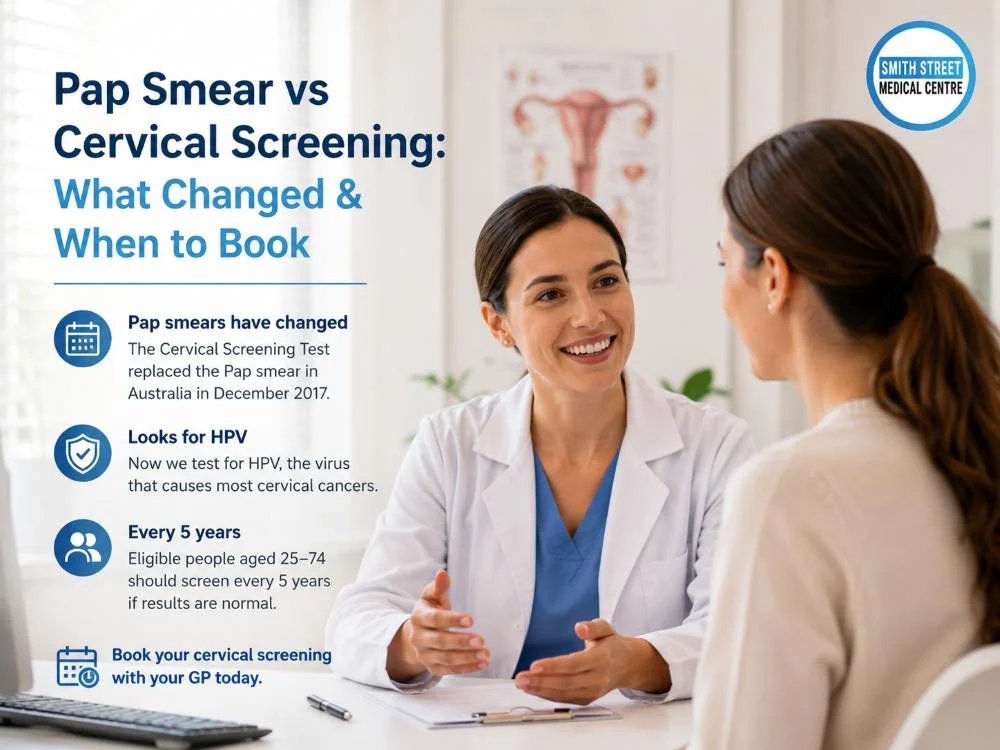
In most cases, a GP, a nurse, or a trained healthcare provider can check whether you are due, explain your collection options, and arrange follow-up if needed.
Is a Pap Smear the Same as a Cervical Screening Test?
A Pap smear is not the same as the current Cervical Screening Test, because the older Pap smear looked for abnormal cervical cells, while the newer test checks for HPV.
The Pap smear was previously used in Australia as the routine cervical cancer screening test. The Cervical Screening Test replaced it in December 2017, according to the National Cervical Screening Program.
The main change is what the test looks for. HPV is a common virus that causes most cervical cancers. The Cervical Screening Test checks for HPV so that the risk can be found and followed up earlier.
Why Do People Still Say “Pap Smear”?
People still say “Pap smear” because it is easier to say, and it was the familiar name for cervical screening for many years until 2017. If you ask your GP for a Pap smear today, they will usually understand that you mean cervical screening. The important point is that the current Australian test is called the Cervical Screening Test.
From Pap Smear to Cervical Screening – What Changed?
Australia changed from the Pap test to the Cervical Screening Test in 2017 to screen for HPV, the virus causing most cervical cancers.
The Pap test looked for abnormal cervical cell changes after they had already developed, while the Cervical Screening Test looks for HPV infection, which can lead to cervical cell changes in the future.
| Feature | Pap Smear | Cervical Screening |
| Main purpose | Looked for abnormal cervical cell changes | Looks for HPV |
| Current routine test in Australia | No, replaced in 2017 | Yes |
| Routine screening interval | Previously every 2 years | Usually every 5 years if eligible and results are normal |
| Main collection method | Clinician-collected sample | Self-collected or clinician-collected, where suitable |
| What it helps prevent | Cervical cancer through finding cell changes | Cervical cancer through finding HPV risk earlier |
This change does not mean the old Pap smear was useless. It means the screening program changed because HPV testing is now the routine approach used in Australia.
Why Does the Cervical Screening Test Look for HPV?
The Cervical Screening Test looks for HPV because HPV is the reason for almost all cervical cancers. HPV is common, and in many people, it clears without causing serious problems. However, it sometimes stays in the body as a persistent high-risk infection. In such cases, it may lead to cervical cell changes that may become cancer if not managed early.
That is why cervical screening is not just a test for cancer. It is a preventive test that helps identify risk early enough to allow monitoring or treatment when needed.
When Should You Book a Cervical Screening Test?
You should book a Cervical Screening Test if you are aged 25 to 74, have a cervix, have ever had sexual contact, and are due or overdue for routine screening.
Australia’s National Cervical Screening Program recommends that eligible people have a routine cervical screening every 5 years. You may be due if:
- You have turned 25
- It has been 5 years since your last normal Cervical Screening Test
- You are unsure when your last test was
- You received a reminder from the National Cancer Screening Register
- Your GP or healthcare provider has advised follow-up
- You are overdue and have been putting it off
You can ask a GP or women’s health specialist to check whether you are due and explain what type of test is appropriate for your situation.
Do You Still Need Cervical Screening If You Had the HPV Vaccine?
Yes, you still need cervical screening even if you had the HPV vaccine. That’s because the HPV vaccine cannot prevent all types of HPVs that may cause cervical cancer, although it is highly effective.
If you are eligible for cervical screening, follow the recommended screening schedule unless your doctor has given you different advice.
What If You Are Under 25?
Routine cervical screening generally starts at age 25, but you should still see a GP earlier if you have symptoms or have been told to follow up on a previous abnormal result.
Do not wait until age 25 if you have abnormal bleeding, unusual discharge, pain during sex, or symptoms that worry you. Symptoms need medical assessment, not routine screening.

Can a Female Doctor Do Cervical Screening?
Yes, you can request a qualified female doctor, nurse, or trained healthcare provider to help with cervical screening if that makes you feel more comfortable. They will check whether you are due, discuss collection methods, and explain your results. If you feel anxious about cervical screening, have had a difficult past experience, or prefer to discuss women’s health concerns with a female GP, you can ask your clinic to arrange a female GP.
Self-Collection vs Clinician Collection: What Are Your Options?
For cervical screening, your vaginal sample must be collected using a swab, either by yourself or by a healthcare professional. Your GP can explain which option is suitable for you. Clinician collection may be needed in certain situations, such as when a co-test or further assessment is required. This sample is then tested for HPV.
| Option | What happens | May suit |
| Self-collection | You collect a vaginal swab yourself | Patients who prefer privacy or feel anxious about a speculum examination |
| Clinician collection | A doctor or nurse collects a cervical sample using a speculum | Patients who prefer clinician collection or need a specific type of follow-up test |
Is Self-Collection the Same as Doing the Test at Home?
Self-collection is not the same as doing an unsupervised home test, because it is still arranged through a healthcare provider.
A healthcare provider gives you the correct swab, explains how to collect the sample, sends the sample for testing, receives the result, and explains the next step. If HPV is detected or a follow-up test is needed, your GP or healthcare provider will tell you what to do next.
Do You Need a Gynaecologist for Cervical Screening?
You usually do not need a gynaecologist for routine cervical screening, as a GP or other trained healthcare provider can arrange the test.
A gynaecologist may be involved if you have:
- An abnormal Cervical Screening Test result that needs specialist follow-up
- Symptoms that need gynaecological assessment
- A need for colposcopy
- A complex cervical screening history
- Persistent bleeding or unusual discharge
- Previous treatment for significant cervical cell changes
For routine screening questions, start with a GP. Your GP can refer you to a gynaecologist if specialist assessment is needed.
When Should You See a Doctor Before Your Next Cervical Screening Test?
If you have abnormal bleeding, bleeding after sex, bleeding after menopause, persistent unusual discharge, pelvic pain, or pain during sex, you should see a doctor before your next test. Cervical screening is designed for people without symptoms. If you have symptoms, you may need a diagnostic assessment rather than routine screening.
Book a GP appointment if you notice:
- Bleeding between periods
- Bleeding after sex
- Any bleeding after menopause
- Persistent unusual vaginal discharge
- Pain during sex
- Pelvic pain
- Bleeding that is new, unexplained, or different from your usual pattern
These symptoms do not automatically mean cervical cancer. They can have many causes. But they should be assessed by a doctor instead of waiting for your next routine screening reminder.
What Happens If Your Cervical Screening Test Result Is Abnormal?
An abnormal Cervical Screening Test result does not always mean cancer, but it does mean HPV or cervical cell changes may need follow-up.
Your next step depends on the result. Your GP or healthcare provider may recommend:
- Repeat testing at a specific interval
- A clinician-collected sample
- A co-test
- Referral for colposcopy
- Referral to a gynaecologist
- Further investigation if symptoms are present
Do not ignore an abnormal result. Follow-up is the part of screening that helps prevent cervical cancer.
Final Thoughts: Book Cervical Screening When You Are Due
You should book cervical screening (or a Pap smear) when you are due, overdue, unsure of your last test date, or worried about symptoms. A GP or women’s health GP can help you understand whether you are due, whether self-collection is suitable, whether clinician collection is needed, and whether any symptoms need separate assessment.
Frequently Asked Questions
Is a Pap smear still done in Australia?
The Pap smear was replaced by the Cervical Screening Test in Australia in December 2017.
What replaced the Pap smear?
The Cervical Screening Test replaced the Pap smear as Australia’s routine cervical cancer screening test.
What is the difference between a Pap smear and a Cervical Screening Test?
A Pap smear looked for abnormal cervical cell changes, while the Cervical Screening Test looks for HPV, the virus that causes most cervical cancers.
How often do I need cervical screening?
Eligible people aged 25 to 74 should have a Cervical Screening Test every 5 years if their results are normal.
At what age should cervical screening start?
Routine cervical screening in Australia typically starts at age 25 for eligible women and people with a cervix.
Can I self-collect my Cervical Screening Test?
Yes, many eligible patients can choose self-collection for routine cervical screening, but it still needs to be arranged through a healthcare provider.
Can I ask for a female doctor?
Yes, you can ask for a female doctor when booking cervical screening if that makes you feel more comfortable.
Do I need a gynaecologist for cervical screening?
You usually do not need a gynaecologist for routine cervical screening, but your GP may refer you if you have abnormal results or symptoms, or if you need specialist follow-up.
Should I book earlier if I have symptoms?
Yes, you should book earlier if you have abnormal bleeding, bleeding after sex, bleeding after menopause, persistent unusual discharge, pelvic pain, or pain during sex.
Do I still need cervical screening after the HPV vaccine?
Yes, routine cervical screening is recommended even if you had the HPV vaccine. That’s because the vaccine doesn’t protect against each and every HPV strain that could cause cervix cancer, even though it is highly effective against most HPVs and significantly reduces cancer risk.
Comments are closed