
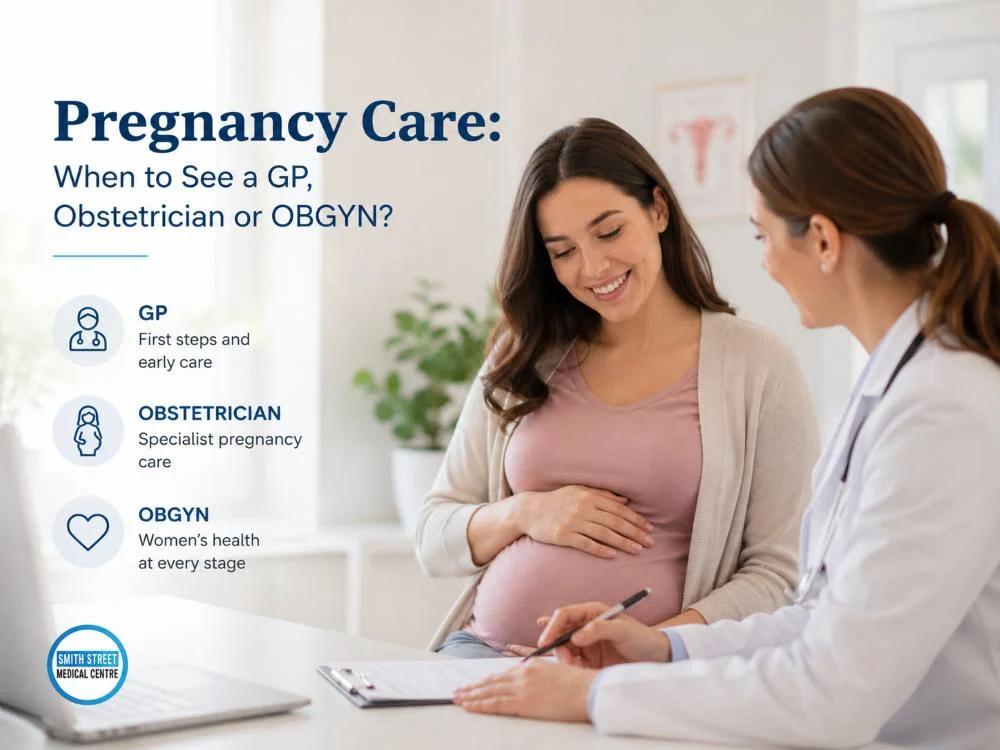
In Australia, your GP is often the best first point of contact for early pregnancy care. A GP can confirm your pregnancy, estimate your due date, arrange early tests, review your general health, discuss medicines and supplements, and help you understand your care options.
You may later see an obstetrician, hospital maternity team, midwife, or shared care provider, depending on your pregnancy, preferences, health history, and referral needs.
This guide explains who to see first, when specialist pregnancy care may be needed, and when pregnancy symptoms should be checked urgently.
Who to See First When You Find Out You’re Pregnant?
If you have a positive home pregnancy test or think you may be pregnant, it is best to book an appointment with a GP. They can confirm your pregnancy, provide an estimated due date, and begin early pregnancy care. Even if you feel well, this first appointment matters because it gives you a chance to ask questions, discuss symptoms, and make sure the right early checks are arranged.
Many people book their first pregnancy GP appointment around 6 to 8 weeks of pregnancy, or as soon as they know they are pregnant. If you are unsure how far along you are, your GP can help estimate your pregnancy dates based on your last period and, when needed, organise further testing or imaging.
You do not need to wait until you have chosen a hospital, obstetrician, or birth plan before speaking with a GP. Your GP can help you understand the next steps.
What Can a GP Help With During Early Pregnancy?
A GP plays an important role in early pregnancy care, especially in the first trimester, when you need guidance on testing, symptoms, lifestyle, supplements, and referral options.
| Pregnancy care needs | How can a GP help? |
| Confirming pregnancy | Arrange or discuss urine or blood testing if needed |
| Estimating due date | Calculate dates based on your last menstrual period and arrange dating scans if appropriate |
| Early health review | Ask about your medical history, family history, previous pregnancies, medicines, allergies, and current symptoms |
| Routine tests | Organise early pregnancy blood tests, urine tests, screening discussions, or ultrasound referrals where clinically appropriate |
| Supplements and medicines | Discuss pregnancy supplements and review whether current medicines are safe to continue |
| Symptoms | Give advice for nausea, tiredness, mild cramping, breast tenderness, or other common early pregnancy concerns |
| Referral options | Discuss whether you may need hospital maternity care, an obstetrician, midwife-led care, or shared antenatal care |
| Ongoing planning | Help you understand what appointments and checks may come next |
A GP appointment is also a good time to talk about your work, mental wellbeing, diet, exercise, travel plans, existing health conditions, and any worries you have about pregnancy.
Do You Need an Obstetrician Straight Away?
Not always. Some people choose private obstetrician-led care from early pregnancy, while others receive care through a public hospital, midwives, shared care with a GP, or a mix of services. The right choice depends on your health, pregnancy risk, personal preference, local maternity services, and whether specialist care is needed.
An obstetrician may become involved early if you choose private obstetric care, have a higher-risk pregnancy, have significant symptoms, or have a medical history that needs specialist pregnancy input.
If your pregnancy appears low-risk at the start, your GP may discuss public hospital maternity care, midwife-led care, shared antenatal care, or referral options. If risk factors appear later, your care pathway can change.
When Should You See an Obstetrician or OBGYN?
You should see an obstetrician or OBGYN when you have pregnancy complications or need closer monitoring because of your medical history, symptoms, test results, or pregnancy risk.
An obstetrician may be involved if you have:
- A previous high-risk pregnancy
- A previous caesarean birth or complex birth history
- A multiple pregnancy, such as twins
- High blood pressure or pre-eclampsia risk
- Diabetes or gestational diabetes concerns
- Kidney disease, heart disease or autoimmune disease
- Thyroid disease requiring pregnancy monitoring
- Significant bleeding or pain
- Abnormal blood test, urine test, ultrasound or screening results
- Concerns about the baby’s growth or movement
- A pregnancy that needs hospital specialist oversight
OBGYN is a popular term, but in Australia, the more usual terms are obstetrician for pregnancy & birth care, and gynaecologist for non-pregnancy reproductive health care.
When Should You Book a GP Appointment?
You should book a GP appointment as soon as you know or suspect you are pregnant, ideally early enough to begin antenatal care within the first 10 weeks of pregnancy.
Book a GP appointment if:
- You have a positive home pregnancy test
- Your period is late and pregnancy is possible
- You are unsure how far along you are
- You need pregnancy confirmation
- You need a blood test or dating scan referral
- You are taking regular medication
- You have bleeding, pain, severe nausea or concerning symptoms
- You have a medical condition that may affect pregnancy
- You have had a previous miscarriage, ectopic pregnancy or pregnancy complication
- You want to discuss public hospital, private obstetrician or shared care options
- You prefer to see a GP with an interest in women’s health
If symptoms are severe, do not wait for a routine GP appointment. Seek urgent medical care or call triple zero (000).

GP, Obstetrician, Gynaecologist, or OBGYN: What’s the Difference?
A GP is often the first doctor for early pregnancy care, an obstetrician is a specialist in pregnancy and birth, a gynaecologist focuses on reproductive health, and an OBGYN is trained in both obstetrics and gynaecology.
| Provider | Main role in pregnancy care |
| GP | First contact for pregnancy confirmation, early tests, symptoms, medicine review, referrals and shared care discussion |
| Obstetrician | Specialist doctor for pregnancy, labour, birth and higher-risk pregnancy care |
| Gynaecologist | Specialist for reproductive health concerns, usually outside routine pregnancy care unless also trained in obstetrics |
| OBGYN | Term commonly used overseas for a doctor trained in both obstetrics and gynaecology |
| Midwife | Health professional who supports pregnancy, labour, birth and postnatal care |
| Hospital maternity service | Public maternity care team that may include midwives, doctors and obstetricians |
For most early pregnancy questions, a GP is a practical first step because they can assess your situation and refer you to the right service.
What Is Shared Pregnancy Care?
Shared pregnancy care, sometimes called shared antenatal care, means your pregnancy care is shared between your GP and a hospital maternity service or midwifery team.
In shared antenatal care, some appointments may be with your GP, and others with the hospital or maternity team. This can help suitable patients receive part of their antenatal care closer to home while still staying connected with hospital maternity services.
Shared care is not suitable for everyone. If your pregnancy requires specialist monitoring, your care may be managed primarily by a hospital maternity team or an obstetrician.
Ask your GP whether shared care may be appropriate for you and whether the hospital you plan to attend supports it.
What Early Pregnancy Tests Can You Discuss With a GP?
You can discuss pregnancy confirmation, early blood tests, urine testing, ultrasound referral and screening options with a GP.
Depending on your situation, your GP may discuss or arrange:
- Urine or blood pregnancy testing
- Blood group and antibody testing
- Full blood count and iron studies
- Tests for infections that matter in pregnancy
- Rubella immunity
- Syphilis screening
- Hepatitis B and hepatitis C screening
- HIV screening
- Urine testing for infection or protein if clinically indicated
- Dating ultrasound
- First-trimester screening options
- Genetic or chromosomal screening discussions
- Blood pressure and weight checks
- Medicine and supplement review
Not every patient needs every test at the same time. Your GP can explain why a test is recommended, what is optional, and what may depend on your personal risk factors.
When Should Pregnancy Symptoms Be Checked Urgently?
Pregnancy symptoms like heavy bleeding, severe pain, fainting, severe headache, vision changes, sudden swelling, fever, fluid leakage, reduced baby movement later in pregnancy, or falling seriously ill should be checked urgently.
Seek urgent medical advice if you have:
- Heavy vaginal bleeding
- Severe abdominal, pelvic or shoulder-tip pain
- Dizziness, fainting or collapse
- Severe or persistent vomiting with dehydration
- Fever or chills
- Severe headache
- Blurred vision, vision loss or seeing spots
- Sudden swelling of the face, hands or feet
- Chest pain or shortness of breath
- Fluid leaking from the vagina
- Contractions before 37 weeks
- Reduced or changed baby movements later in pregnancy
- Pain or burning when passing urine
- Trauma, fall, car accident or injury to the abdomen
- A strong feeling that something is wrong
Call triple zero (000) or go to the nearest emergency department if symptoms are severe, sudden or frightening. For less severe but concerning symptoms, contact your GP, maternity unit, midwife or hospital advice line.
Can You Choose a Female Doctor for Pregnancy Care?
Yes, you can ask to see a female doctor if that makes you feel more comfortable discussing symptoms, examinations, medical history or other women’s health concerns. They can help with early pregnancy confirmation, tests, referrals and care planning. However, availability depends on the clinic’s schedule, so ask the provider when booking.
The most important point is that you feel able to speak openly about bleeding, pain, nausea, mental health, medicines, previous pregnancies, miscarriage history, domestic safety concerns or any symptom you are worried about.
Start With a GP and Plan the Right Pregnancy Care Steps
Start with a GP if you are pregnant or think you may be pregnant. Early GP care can confirm the pregnancy, arrange important tests, review risks and connect you with the right maternity pathway.
You may later see a hospital maternity team, a midwife, an obstetrician, or a shared care provider, depending on your health, pregnancy risk, preferences, and local services.
You do not need to decide everything before your first appointment. A GP can help you take the first safe step and explain what should happen next.
Frequently Asked Questions
Who should I see first when I find out I’m pregnant?
You should see a GP first when you find out you are pregnant. They can confirm the pregnancy, estimate your due date, arrange early tests and discuss referral options.
Can a GP confirm pregnancy?
Yes, a GP can confirm pregnancy using your history, a urine pregnancy test or a blood pregnancy test when needed.
Do I need to see an obstetrician straight away?
You do not always need to see an obstetrician straight away unless you have risk factors, show concerning symptoms, or need specialist pregnancy input.
What does an obstetrician do during pregnancy?
An obstetrician provides specialist medical care during pregnancy, labour and birth, especially for higher-risk pregnancies, complications or private obstetric care.
Is an OBGYN the same as an obstetrician?
An OBGYN is a doctor trained in obstetrics and gynaecology. In Australia, the term “obstetrician” is more commonly used to refer to a specialist in pregnancy and birth.
What is shared pregnancy care?
Shared pregnancy care means your antenatal care is shared between your GP or another approved provider and a hospital maternity service.
What tests can a GP arrange in early pregnancy?
A GP can arrange pregnancy confirmation testing, blood tests, urine tests, ultrasound referral, screening options, blood pressure checks and medicine review.
When should I seek urgent help during pregnancy?
You should seek urgent help for heavy bleeding, severe pain, fainting, severe headache, vision changes, sudden swelling, fever, fluid leakage, reduced baby movement later in pregnancy or if you feel seriously unwell.
Can I ask for a female doctor for pregnancy care?
Yes, you can ask for a female doctor when booking a pregnancy care appointment, depending on appointment availability at the clinic.


Comments are closed