
Most telehealth appointments with a GP in Australia take 15 to 20 minutes, but a quick check-in with a doctor who already knows your history can wrap up in just 5 minutes. A first appointment for new or complex symptoms, or something like a mental health care plan, can take 45 minutes or more.

How Long Does the Consultation Itself Take?
Once your doctor is online, the length of the consultation depends on what you’re discussing. Telehealth appointments generally fall into 3 categories:
- Short consultations (5–10 minutes): Repeat scripts for a stable & known condition, quick follow-ups after a previous visit, and medical certificates for a single day of illness.
- Standard consultations (15–20 minutes): New symptoms being assessed for the first time, medication reviews, referral requests, and common non-threatening illnesses.
- Longer consultations (30–60 minutes): Mental health care plan preparation, chronic condition management, complex or multi-issue appointments, and detailed history-taking.
A standard telehealth consultation usually runs up to about 20 minutes, similar to a regular GP visit. Longer appointments — such as mental health care plan preparation or chronic condition reviews — commonly run 20 to 40 minutes, and complex or multi-issue consultations can take 40 minutes or more. [1]
How Long Should I Wait for a Telehealth Appointment?
In Australia, you typically need to wait 15 to 60 minutes for telehealth appointments, depending on your provider. If your clinic lets you choose a specific time slot using a booked-appointment system, your wait time will be shorter and more predictable than on-demand platforms. Still, keeping a small buffer of 10 to 15 minutes is recommended, especially during busy periods like winter.
If you have waited more than 15 to 20 minutes and have not heard anything, contact the clinic to check whether the GP is delayed, the phone number is correct, or the appointment needs to be rescheduled.
Why Do GPs Sometimes Run Late, and What Should You Do?
GPs run late for the same reason in telehealth as they do in a clinic: the patient before you needed more time. That’s the nature of medical care: a conversation about symptoms can’t always be cut off at the 5-minute mark.
A patient before you may need urgent advice, a result may need explanation, a mental health concern may take longer than expected, or a child, an older patient, or a complex condition may require more clinical time. The same clinical care that protects another patient today will protect you in the future when your concern needs more time.
If your doctor is running late, you’ll usually be notified by SMS or email, and most providers will let you rebook or organise a follow-up if the wait becomes excessive. If you’re waiting and haven’t heard anything, it’s fine to contact the clinic, but try to allow at least 15 minutes past your scheduled time before assuming something has gone wrong. A GP running slightly behind is normal; it doesn’t mean your appointment has been forgotten.
Can I Have a Telehealth Appointment During My Lunch Break?
A lunch break is enough time for most standard appointments. A 20-30 minute window gives you enough time for the call itself, plus a few minutes to find a quiet spot and have your details ready.
However, it may not be possible if you’re seeing a new doctor, discussing something sensitive for the first time, or if the GP identifies something that needs more time than expected. If any of that applies, you should book a day with more flexibility or schedule the appointment outside of work hours.
Should I Take a Longer Break or a Half Day for Some Appointments?
Yes, if you’re booking a mental health care plan, discussing a new chronic condition, or want to go through multiple issues properly, treat it like you would a longer in-person GP visit and set aside at least 1 hour.
The same applies if you want to talk without feeling rushed. A telehealth appointment is a real medical consultation, and the more clearly you explain your symptoms, the better the GP can help you.
Don’t cut yourself short because you’re watching the clock. Your health matters more!
How to Keep Your Appointment Short Without Rushing
The best way to make sure your appointment doesn’t run longer than necessary is to come prepared. Before the call, have the following ready:
- Your symptoms and when they started
- Current medications, including anything over the counter
- The dates you’ve been unwell or off work, if you need a certificate
- Any recent test results you’d like to discuss
- A clear idea of what you want to get out of the appointment
Being prepared isn’t about rushing the GP. It’s about using the time well so nothing important gets missed.
Book a Telehealth Appointment at Smith Street Medical
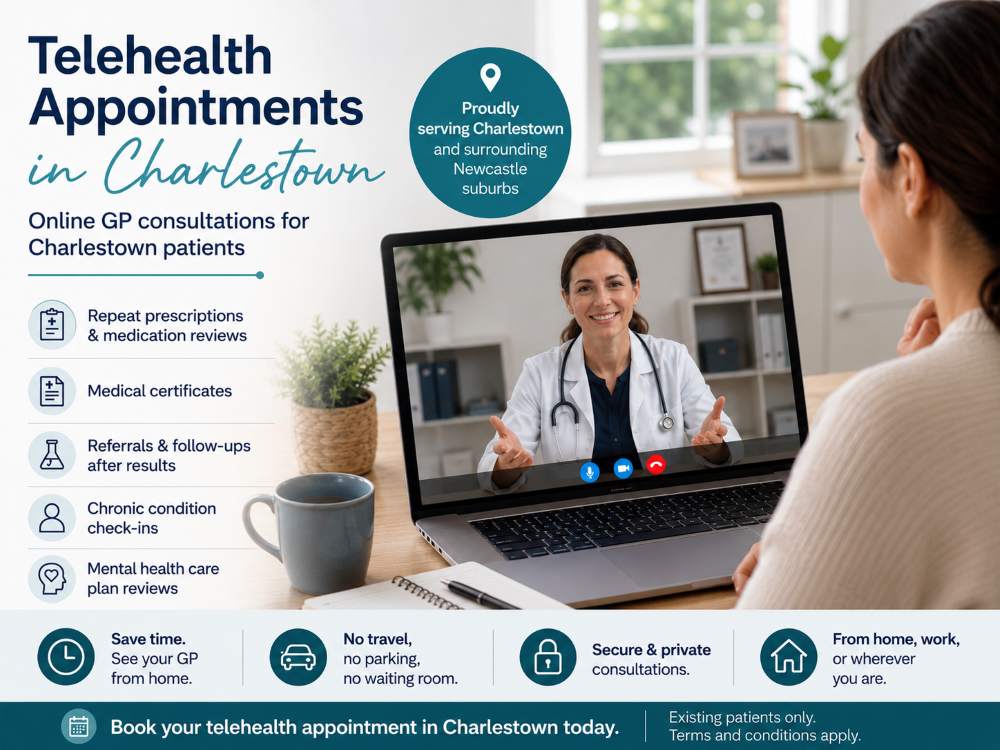
Smith Street Medical offers telehealth appointments by phone or video for patients in Charlestown, Kotara, Gungahlin, and the surrounding areas. Whether you need a same-day consult for a short-term illness, a repeat script, or a longer appointment for something more complex, our GPs take the time to properly assess your situation.
Book a telehealth appointment here 👉 Telehealth GP Appointment
Yes, a GP can issue a medical certificate through a telehealth appointment when the consultation is conducted in real time and provides enough clinical information to confirm illness, injury, or carer’s leave. The certificate is issued based on medical judgment, not the format of the appointment.
Telehealth appointments take place by phone or video. Telehealth allows patients to consult healthcare providers, including a GP, by phone or video when a physical examination is not needed. For many common situations, a phone or video consultation gives the GP everything needed to assess your condition and prepare a certificate.
A telehealth appointment is suitable for straightforward situations where the GP can assess your symptoms, ask clinical questions, review your history clearly, and make a decision without examining you in person.
This often includes:
cold and flu symptoms
mild gastro symptoms
short-term illness
mental health-related work absence
career’s leave for a family or household member
follow-up after a previous appointment
conditions already known to the clinic
A telehealth appointment is a proper medical consultation, not a shortcut for paperwork. The GP still assesses your condition before deciding whether a certificate is appropriate.
Yes, and this applies regardless of whether the appointment is in person or by telehealth. A medical certificate is not a simple form but a medical document that requires clinical judgement from a licensed healthcare provider.
The Medical Board of Australia’s telehealth guidelines (in effect since 1 September 2023) confirm that issuing a medical certificate is a medical service that requires a real-time consultation. That means it requires a real-time doctor-patient consultation, assessment, treatment if needed, and a decision that a certificate is clinically indicated. A GP cannot issue a valid certificate based on a message, a form submission, or a request made without a proper consultation. The doctor needs sufficient information to make an accurate assessment and validate the certificate’s contents.
An in-person appointment is needed when the GP requires a physical examination, direct observation, testing, or urgent assessment to make a clinical decision. Telehealth has genuine limits, and a good GP will tell you honestly when those limits apply.
Situations that typically require an in-person visit include:
chest pain or breathing difficulty
severe or unexplained pain
injury after a fall or accident
worsening symptoms that are not improving
workplace injuries requiring detailed assessment
any symptoms the GP cannot assess without examining you
concerns that may need emergency care
Telehealth is not appropriate for all consultations because the standard of care is limited. If your GP determines that an in-person visit is necessary after you start a telehealth consultation, they will let you know and explain why.
In most cases, yes. Employers generally require only that the certificate be issued by a registered doctor following a proper consultation. It usually does not matter whether that consultation took place in a clinic or by phone or video.
The Fair Work Ombudsman states that employers can ask for evidence when an employee takes sick or carer’s leave, and that a medical certificate or a statutory declaration is an accepted form of evidence. The evidence must be enough to satisfy a reasonable person that the employee was entitled to the leave.
Fair Work also confirms that employers can request evidence for as little as one day off work. If your workplace has specific requirements around certificate wording or format, raise this with your GP before the consultation ends.
Before the appointment, have the following ready:
your symptoms and when they started
the date you stopped work or study
your expected return date
current medications
any relevant medical history
your employer’s requirements for certificate wording, if you know them
When you have all the necessary information ready before your telehealth appointment, your GP will be able to complete the consultation quickly and ensure that the certificate accurately reflects your situation.
Frequently Asked Questions
How long does a telehealth appointment take in Australia?
Most standard telehealth GP appointments take 15 to 20 minutes. Simple consultations, such as repeat scripts, can be shorter, while complex appointments, such as mental health care plans, can take 45 minutes or more. The length depends on what you're discussing and how much history the GP needs to take.
How long do I have to wait before the GP calls me?
With a booked appointment, your GP will usually call at or close to your scheduled time. It's reasonable to expect a wait of up to 15 minutes either side of your booking, particularly during busy periods like winter. On-demand telehealth platforms without set appointment times can lead to longer wait times.
Can I do a telehealth appointment during my lunch break?
Yes, for most standard consultations. Allow at least 30 minutes to cover the wait, the call, and a few minutes to find a quiet space beforehand. If you're discussing something new or complex, consider booking at a time when you're not under time pressure.
What if the GP is running late?
GPs run late for the same reason they do in a clinic: a previous patient needed more time. Allow 10 to 15 minutes past your scheduled time before following up. Most clinics will notify you by SMS if there's a significant delay.
Do longer telehealth appointments cost more?
In some cases, yes. Medicare uses different item numbers for standard and longer consultations, which can affect how much is billed and what rebate applies. Your clinic can confirm the fees and rebates that apply to your specific appointment type when you book.
What should I have ready before my telehealth call?
Have your Medicare card details, a list of your current medications, notes on your symptoms and when they started, any recent test results, and the dates you've been unwell if you need a medical certificate. Being prepared helps the GP assess your situation more accurately and keeps the appointment focused.
Yes, a GP can issue a medical certificate through a telehealth appointment when the consultation is conducted in real time and provides enough clinical information to confirm illness, injury, or carer's leave. The certificate is issued based on medical judgment, not the format of the appointment.
Telehealth appointments take place by phone or video. Telehealth allows patients to consult healthcare providers, including a GP, by phone or video when a physical examination is not needed. For many common situations, a phone or video consultation gives the GP everything needed to assess your condition and prepare a certificate.
When is a Telehealth Medical Certificate Suitable?
A telehealth appointment is suitable for straightforward situations where the GP can assess your symptoms, ask clinical questions, review your history clearly, and make a decision without examining you in person.
This often includes:
cold and flu symptoms
mild gastro symptoms
short-term illness
mental health-related work absence
career’s leave for a family or household member
follow-up after a previous appointment
conditions already known to the clinic
A telehealth appointment is a proper medical consultation, not a shortcut for paperwork. The GP still assesses your condition before deciding whether a certificate is appropriate.
Does a GP Still Need to Assess You Before Issuing a Certificate?
Yes, and this applies regardless of whether the appointment is in person or by telehealth. A medical certificate is not a simple form but a medical document that requires clinical judgement from a licensed healthcare provider.
The Medical Board of Australia’s telehealth guidelines (in effect since 1 September 2023) confirm that issuing a medical certificate is a medical service that requires a real-time consultation. That means it requires a real-time doctor-patient consultation, assessment, treatment if needed, and a decision that a certificate is clinically indicated. A GP cannot issue a valid certificate based on a message, a form submission, or a request made without a proper consultation. The doctor needs sufficient information to make an accurate assessment and validate the certificate's contents.
When Do You Need an In-Person Appointment Instead?
An in-person appointment is needed when the GP requires a physical examination, direct observation, testing, or urgent assessment to make a clinical decision. Telehealth has genuine limits, and a good GP will tell you honestly when those limits apply.
Situations that typically require an in-person visit include:
chest pain or breathing difficulty
severe or unexplained pain
injury after a fall or accident
worsening symptoms that are not improving
workplace injuries requiring detailed assessment
any symptoms the GP cannot assess without examining you
concerns that may need emergency care
Telehealth is not appropriate for all consultations because the standard of care is limited. If your GP determines that an in-person visit is necessary after you start a telehealth consultation, they will let you know and explain why.
Will Your Employer Accept a Telehealth Medical Certificate?
In most cases, yes. Employers generally require only that the certificate be issued by a registered doctor following a proper consultation. It usually does not matter whether that consultation took place in a clinic or by phone or video.
The Fair Work Ombudsman states that employers can ask for evidence when an employee takes sick or carer's leave, and that a medical certificate or a statutory declaration is an accepted form of evidence. The evidence must be enough to satisfy a reasonable person that the employee was entitled to the leave.
Fair Work also confirms that employers can request evidence for as little as one day off work. If your workplace has specific requirements around certificate wording or format, raise this with your GP before the consultation ends.
What to Prepare Before Your Telehealth Appointment?
Before the appointment, have the following ready:
your symptoms and when they started
the date you stopped work or study
your expected return date
current medications
any relevant medical history
your employer's requirements for certificate wording, if you know them
When you have all the necessary information ready before your telehealth appointment, your GP will be able to complete the consultation quickly and ensure that the certificate accurately reflects your situation.
Comments are closed